
High-Speed Jet UAVs, Edge AI Interceptors, and the 2026–2028 Air-Defense Economics Shift
 Published by Neuron TechnologyReport ID: NT-REP-2026-Q3-09
01The Cost-Exchange Problem
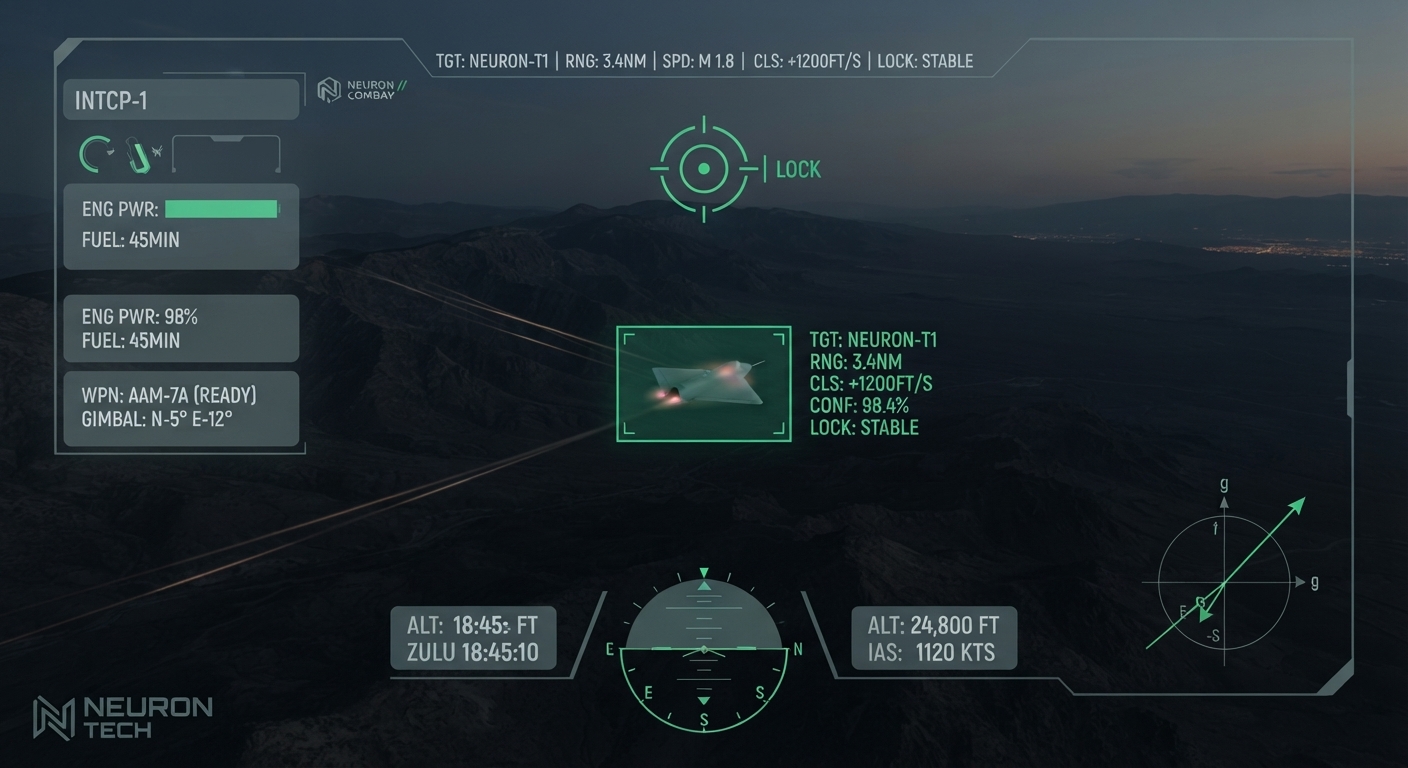
Legacy surface-to-air architecture was priced for a world of scarce, expensive threats. A conventional interceptor at roughly $1.2M per shot made sense against cruise missiles and manned aircraft — it does not against a sub-$250K jet-powered UAV launched in coordinated waves. Our baseline model puts the adverse cost-exchange ratio at 5:1 to 15:1 for missile-centric defenses facing high-speed UAV saturation profiles.
The operational consequence is magazine exhaustion before financial exhaustion: even well-funded defenders cannot stock enough legacy interceptors to cover sustained wave attacks, which forces the doctrinal shift detailed in Sections 3 and 4.
02Edge AI Interceptors Enter Procurement
The countervailing trend is the rapid maturation of interceptor-class autonomy. Vision-based terminal guidance running on radiation-tolerant edge silicon removes the need for continuous ground-radar command links, cutting both per-unit cost and vulnerability to jamming. Disclosed program data across allied markets shows edge-AI interceptor unit costs compressing toward the $60K–$150K band — inside threat-parity range for the first time.
Critically, onboard autonomy also compresses engagement timelines: decisions that once required a networked kill chain now complete on the airframe, which is the only model that scales against Mach-class terminal-phase targets.
03System Category Comparison
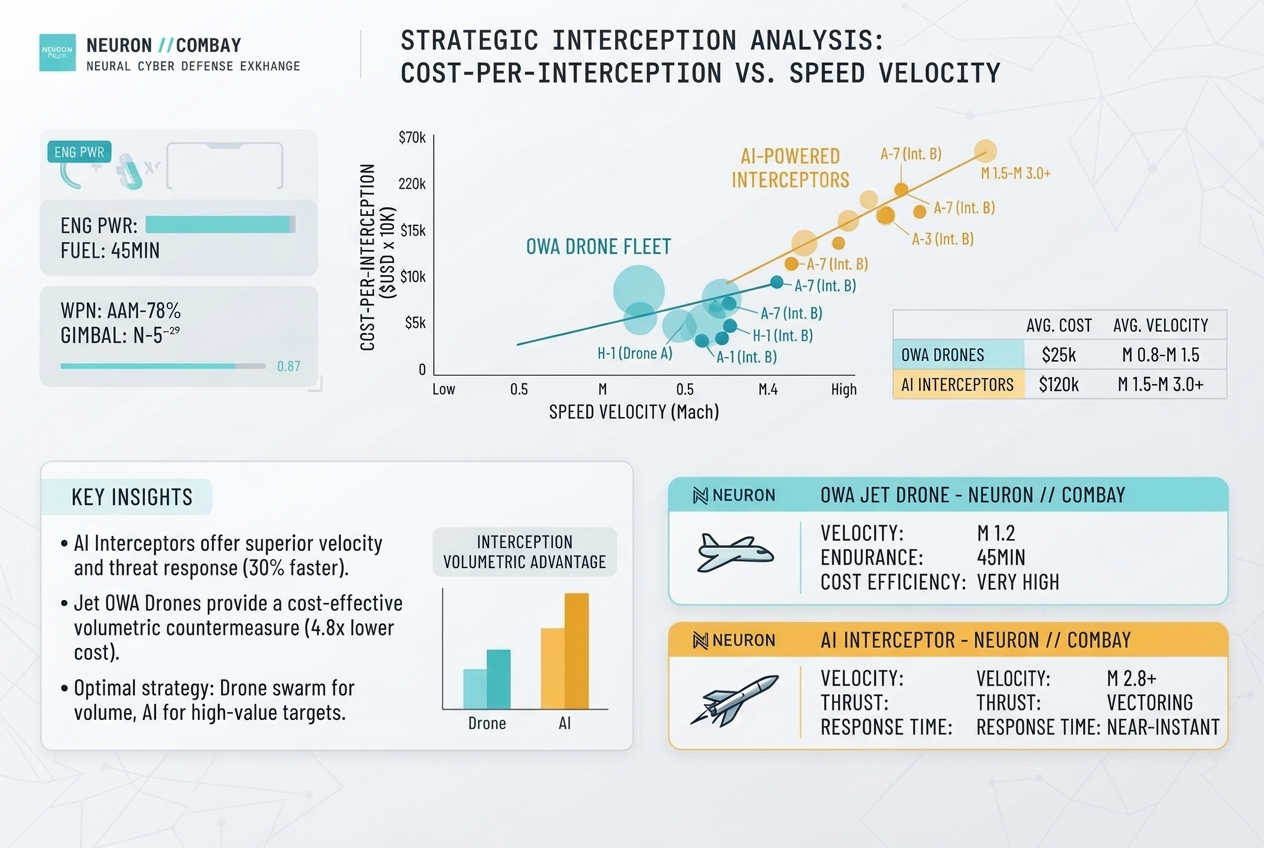
| System Category | Target Speed Match | Avg Cost | Guidance Paradigm | Attrition Risk |
|---|---|---|---|---|
| Legacy SAM Battery | Mach 2.5–4.0 | $1.2M / interceptor | Ground-radar command link | Low |
| High-Speed Jet UAV (Threat) | Mach 0.8–1.4 | $80K–$250K / unit | Autonomous waypoint + GNSS | N/A (attacker asset) |
| Edge AI Interceptor (Kinetic) | Mach 1.2–2.0 | $60K–$150K / unit | Onboard vision + terminal IR | Moderate |
| Directed-Energy Layer | Light speed (beam) | $3–$15 / shot | Optical track + beam control | Low |
| Electronic-Warfare Soft Kill | RF propagation | $0.5K–$5K / engagement | GNSS spoof + link seizure | Variable by adversary autonomy |
Figures are Neuron Technology baseline estimates for the 2026–2028 window; see methodology note in the institutional dossier edition.
04Strategic Outlook, 2026–2028
- 1
Cost-ratio parity becomes a program requirement
Expect formal cost-exchange-ratio caps in 2027 counter-UAS solicitations, forcing primes to publish per-engagement costs alongside capability metrics.
- 2
Edge inference silicon consolidates
Interceptor-grade autonomy stacks will standardize around two or three radiation-tolerant edge AI SoC families, compressing the supply base.
- 3
Layered soft-kill first doctrine
Electronic-warfare-first engagement sequencing becomes the default, reserving kinetic interceptors for autonomy-hardened threats.
- 4
Attrition-tolerant procurement waves
Bulk-buy contracts for sub-$100K interceptors replace boutique programs, mirroring munitions-style acquisition with quarterly lot buys.
- 5
Export-control friction on autonomy weights
Trained interception models and seeker weights join hardware on controlled lists, reshaping allied technology-transfer channels.
Explore more baseline intelligence reports at neurontechnology.com
Quarterly pulses, sector dossiers, and event briefings for institutional decision-makers.